
How Play Helps Children With ADHD and Autism Learn, Express, and Grow
Introduction
Children often express themselves best through play. However, for children with ADHD and autism, play is more than enjoyment—it becomes a powerful therapeutic tool. As a result, structured play therapy helps children communicate emotions, build social skills, and improve attention naturally. At the Best ADHD and Autism Center in Pune, play therapy is used to support emotional, behavioral, and developmental growth in a safe and engaging way.
What Is Play Help ?
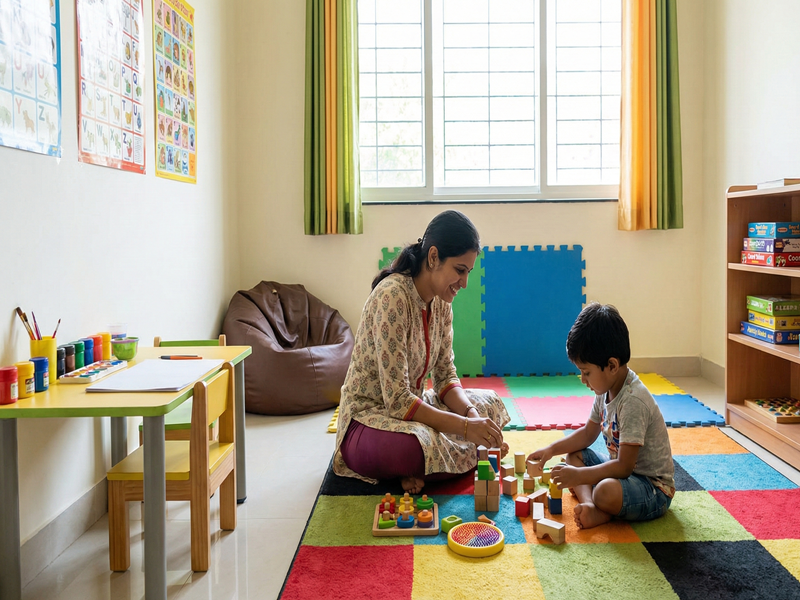
Play therapy is a child-centered therapeutic approach that uses toys, games, art, and creative activities to help children express thoughts and emotions. Instead of relying only on verbal communication, therapists observe and guide children through play to understand their needs and challenges.
This approach becomes even more effective when supported by emotional regulation, which helps children manage feelings that arise during play and interaction.
Why Play Works Well for ADHD and Autism
Children with ADHD and autism may struggle to express emotions verbally. Because of this, frustration or anxiety can build up internally. Play therapy provides a natural outlet where children feel comfortable, understood, and accepted.
Common challenges addressed through play therapy include:
- Difficulty expressing emotions
- Limited social interaction
- Short attention span
- Anxiety or behavioral outbursts
- Difficulty following rules or turn-taking
Key Benefits of Play Therapy
1. Encourages Emotional Expression
Firstly, children learn to express feelings such as anger, fear, or excitement through play. As a result, emotional bottling reduces.
2. Improves Social Skills
Secondly, guided play activities teach sharing, turn-taking, and cooperation. Therefore, peer interactions improve over time.
3. Enhances Attention and Focus
Additionally, structured play helps children remain engaged for longer periods. Over time, attention span improves naturally.
4. Builds Confidence and Self-Esteem
Meanwhile, successful play experiences boost confidence and a sense of achievement.
5. Supports Cognitive and Language Development
Most importantly, play-based activities strengthen thinking, problem-solving, and communication skills.
Techniques Used in Play Therapy
Therapists use a variety of child-friendly techniques such as:
- Role-playing and pretend play
- Art and craft activities
- Board games and interactive toys
- Storytelling and puppets
- Guided group play
Because of this flexible approach, therapy remains enjoyable while achieving developmental goals.
How Play Therapy Is Delivered
Sessions are tailored to the child’s age, interests, and developmental needs. At the same time, therapists gently introduce structure and guidance during play. Parents are also informed about simple play-based strategies to reinforce learning at home.
Why Early Play-Based Intervention Matters
Play therapy is most effective when started early. In contrast, delayed intervention may make emotional and social challenges harder to manage. Early play therapy helps children develop coping skills, communication abilities, and emotional resilience.
Final Thoughts
In conclusion, play therapy is a powerful, child-friendly approach that supports emotional expression, social learning, and overall development in children with ADHD and autism. The Best ADHD and Autism Center in Pune offers structured play therapy programs that help children learn, express themselves, and grow with confidence—one playful step at a time.
