
Pragmatic Language Therapy for Social Communication Development: Helping Children Connect Better
Introduction
Many children with ADHD and autism can speak well, yet still struggle to use language socially. However, challenges like starting conversations, understanding social cues, or maintaining eye contact can limit peer interaction. As a result, targeted support becomes essential. At the Best ADHD and Autism Center in Pune, pragmatic language therapy focuses on building real-life social communication skills that help children connect, participate, and feel confident in everyday interactions.
What Is Pragmatic Language Therapy?
Pragmatic language therapy is a specialized speech and communication service that targets the use of language in social contexts. Rather than focusing only on vocabulary or pronunciation, therapy helps children understand how to use words appropriately across situations—at home, school, and with peers.
This approach supports children who may speak fluently but struggle with social understanding.
Why Pragmatic Language Skills Matter
Language is more than words. Because of this, children must learn how to:
- Start and end conversations
- Take turns while speaking
- Understand facial expressions and tone
- Stay on topic
- Adjust language for different listeners
Without these skills, social interactions can feel confusing or frustrating.
Key Areas Addressed in Pragmatic Language Therapy
1. Conversation Initiation and Turn-Taking
Firstly, children learn how to begin conversations appropriately and wait for their turn. As a result, interactions feel more natural.
2. Understanding Social Cues
Secondly, therapy focuses on recognizing gestures, facial expressions, and tone of voice. Therefore, children respond more accurately in social settings.
3. Topic Maintenance and Relevance
Additionally, children practice staying on topic and sharing relevant information, which improves peer acceptance.
4. Perspective-Taking Skills
Meanwhile, therapy helps children understand others’ viewpoints, improving empathy and cooperation.
How Pragmatic Language Therapy Is Delivered
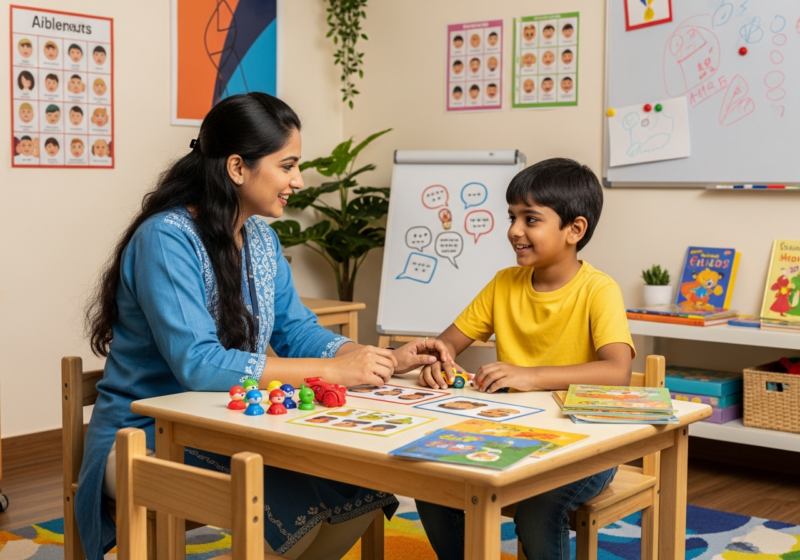
Sessions use structured role-play, storytelling, visuals, and real-life scenarios. At the same time, therapists guide children gently to correct responses and reinforce learning. Progress is gradual, measurable, and applied across settings.
This therapy often works best when aligned with multidisciplinary therapy programs, ensuring communication goals support overall development.
What Parents Can Expect
Parents receive clear feedback and simple strategies to reinforce social communication at home. Because of this consistency, children generalize skills beyond therapy sessions.
Why Early Social Communication Support Matters
Social difficulties can impact confidence and friendships. In contrast, early pragmatic language therapy helps children build strong communication foundations that support long-term social success.
Final Thoughts
In conclusion, pragmatic language therapy plays a vital role in helping children with ADHD and autism use language effectively in social situations. The Best ADHD and Autism Center in Pune offers structured, child-friendly pragmatic language programs that strengthen communication, confidence, and connection—helping children thrive socially.
