
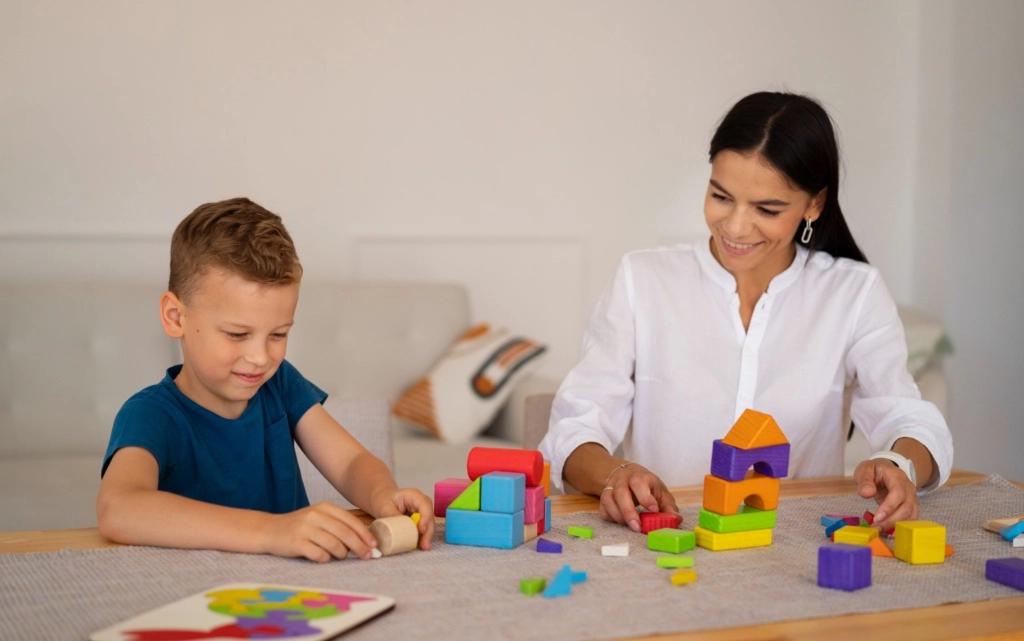
Why Some Autistic Children Prefer Solitary Play: Understanding Independent Play in Autism
Many parents notice that their child prefers playing alone rather than joining group activities. While social interaction is a natural part of childhood development, many children with autism find comfort and enjoyment in solitary play. This often leads parents to wonder whether their child is lonely, struggling socially, or missing important developmental opportunities.
The reality is that solitary play is often a healthy and natural way for autistic children to learn, explore, and engage with their environment. Understanding why some children prefer independent play can help parents provide appropriate support while encouraging overall development.
At Neuro Revolution International, a leading Autism Treatment Center in Pune, we help families understand the unique strengths and developmental needs of children with autism through personalized therapy and early intervention programs.
What Is Solitary Play?
Solitary play refers to activities that a child engages in independently without actively interacting with others. These activities may include:
- Building blocks
- Solving puzzles
- Drawing and coloring
- Reading books
- Sorting objects
- Playing with toys independently
- Exploring special interests
For many autistic children, solitary play is not a sign of isolation. Instead, it provides a comfortable environment where they can focus, learn, and express themselves.
Why Do Some Autistic Children Prefer Solitary Play?
Every child with autism is unique. However, several common factors may explain why some children naturally prefer independent play.
Reduced Social Pressure
Social interactions involve understanding facial expressions, body language, emotions, and verbal communication. For some autistic children, processing all this information can feel overwhelming.
Playing alone allows them to enjoy activities without the pressure of social expectations, making the experience more relaxing and enjoyable.
Comfort in Routine and Predictability
Many children with autism thrive in structured and predictable environments. During solitary play, they have control over:
- What they play with
- How they play
- The pace of the activity
- Their surroundings
This sense of predictability often helps them feel secure and confident.
Sensory Sensitivities
Children with autism may experience sensory sensitivities that make busy environments challenging.
Loud noises, crowded spaces, bright lights, and fast-moving activities can lead to sensory overload. Independent play in a quieter environment allows children to stay calm and regulated.
Strong Focus on Personal Interests
Many autistic children develop deep interests in specific subjects, activities, or objects.
They may enjoy:
- Building structures
- Solving complex puzzles
- Learning about favorite topics
- Organizing and sorting objects
Solitary play provides uninterrupted time to explore these interests and develop valuable skills.
Benefits of Solitary Play for Children with Autism
Contrary to common misconceptions, independent play can offer many developmental benefits.
Improved Concentration
Playing alone helps children focus on tasks for longer periods and develop attention skills.
Enhanced Creativity
Independent play encourages imagination, problem-solving, and creative thinking.
Emotional Regulation
Many children use solitary activities as a way to relax and manage stress. This can improve emotional regulation and reduce anxiety.
Increased Independence
Successfully completing activities independently helps build self-confidence and encourages self-reliance.
Skill Development
Solitary play often supports cognitive development, fine motor skills, and decision-making abilities.
Preference vs. Difficulty: Understanding the Difference
It is important to distinguish between a child who prefers solitary play and a child who wants social interaction but struggles to participate.
Some autistic children:
- Enjoy independent play but can engage socially when comfortable.
- Prefer small social interactions rather than large groups.
Others may experience:
- Communication difficulties
- Social anxiety
- Sensory challenges
- Difficulty understanding social cues
A professional assessment can help determine whether additional support is needed.
How Parents Can Encourage Healthy Social Development
Respect Your Child’s Preferences
Avoid forcing social interaction. Instead, recognize and respect your child’s comfort level while creating opportunities for positive experiences.
Join Their Play
One of the best ways to encourage interaction is by participating in activities your child already enjoys.
Following your child’s interests helps build trust and communication naturally.
Start with Small Social Settings
Large groups can be overwhelming.
Consider:
- One-on-one playdates
- Small group activities
- Structured social opportunities
These settings often feel more manageable for autistic children.
Use Structured Play Activities
Activities with clear rules and expectations can make social interactions easier.
Examples include:
- Board games
- Building projects
- Puzzles
- Turn-taking games
Celebrate Small Achievements
Recognize and encourage positive social behaviors such as:
- Making eye contact
- Taking turns
- Sharing toys
- Initiating communication
Small successes can lead to significant progress over time.
When Should Parents Seek Professional Help?
Professional guidance may be beneficial if your child:
- Avoids all social interaction
- Has difficulty communicating needs
- Struggles to make friends
- Becomes anxious around peers
- Experiences frustration during social situations
Early support can help children build communication and social skills that contribute to long-term success.
This is why many families seek Early Intervention for Autism when developmental concerns first appear.
How Therapy Supports Social Skill Development
Child Psychology Services
An experienced Child Psychologist in Pune can help children:
- Build confidence
- Improve emotional regulation
- Understand social situations
- Develop coping strategies
Speech Therapy
Speech therapy strengthens:
- Communication skills
- Social language abilities
- Conversational skills
- Understanding of social cues
Occupational Therapy
Occupational therapy helps children manage sensory challenges that may affect participation in social activities.
Behavioral Therapy
Behavioral interventions teach essential social skills such as:
- Sharing
- Listening
- Turn-taking
- Cooperative play
- Responding appropriately to others
Many children receiving ADHD Treatment in Pune and autism-related therapies benefit from structured social skills programs designed to improve meaningful interactions.
Why Choose Neuro Revolution International?
At Neuro Revolution International, we understand that every child develops differently. As a trusted Autism Treatment Center in Pune, we provide comprehensive support through speech therapy, occupational therapy, behavioral therapy, sensory integration programs, and child psychology services.
Our personalized therapy plans focus on improving communication, social interaction, emotional regulation, and daily living skills. Whether your child requires Early Intervention for Autism or guidance from an experienced Child Psychologist in Pune, our multidisciplinary team is dedicated to helping children build confidence, independence, and lifelong success.
Conclusion
Many autistic children prefer solitary play because it provides comfort, predictability, and an opportunity to focus on activities they enjoy. Independent play is often a valuable part of development and should be respected rather than discouraged.
At the same time, children benefit from opportunities to develop communication and social skills in ways that feel safe and supportive. With understanding, patience, and professional guidance, every child can continue to grow and thrive at their own pace.
At Neuro Revolution International, we are committed to helping children reach their full potential through personalized therapy, expert guidance, and compassionate care. Contact us today to learn how our specialized autism therapy and developmental support programs can help your child succeed.