Transforming Disability into New Ability

Parent preparing child for a clinical developmental assessment

How to Prepare Your Child for a Clinical Developmental Assessment

Introduction A clinical developmental assessment helps parents understand their child’s strengths, challenges, and developmental needs. It may evaluate concerns related to autism, ADHD, communication, behaviour, or social development. Preparing your child calmly can make the experience more comfortable and help professionals gather accurate information. What Is a Clinical Developmental Assessment? This assessment examines different areas of a child’s development through tests, observations, and interviews with the child, parents, or caregivers. At Neuro Revolution International, assessments may include the ISAA, Vanderbilt...

Read More

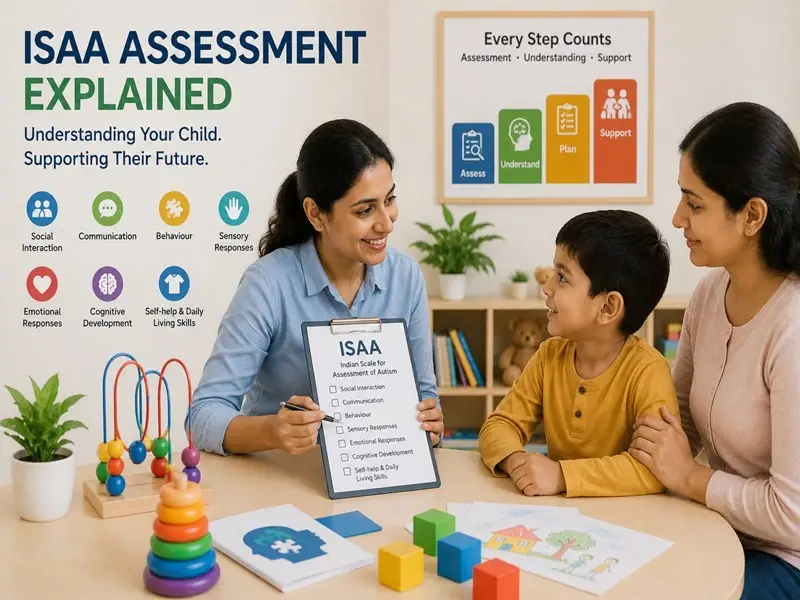
ISAA assessment for autism evaluation in children

ISAA Assessment Explained: What Parents Can Expect During the Evaluation

Introduction When parents notice differences in their child’s communication, social interaction, behaviour, or development, an autism assessment can help provide a clearer understanding of their needs. One assessment used for evaluating autism-related characteristics in Indian children is the Indian Scale for Assessment of Autism (ISAA). At Neuro Revolution International, ISAA is one of the clinical assessments offered to understand a child’s developmental profile and establish a baseline for personalized intervention planning. What Is the ISAA? The Indian Scale for Assessment...

Read More

School readiness therapy helping children develop communication and social skills

How Therapy Can Support School Readiness Beyond Academic Skills

Introduction School readiness is about much more than knowing letters, numbers, or basic academic concepts. A child also needs to communicate, follow routines, interact with others, manage emotions, pay attention, and become increasingly independent. For children with developmental, communication, or behavioural challenges, therapy can help build these foundational skills and make the transition to school more comfortable. What Does School Readiness Really Mean? School readiness includes a combination of social, emotional, communication, behavioural, and practical skills. A child may benefit...

Read More

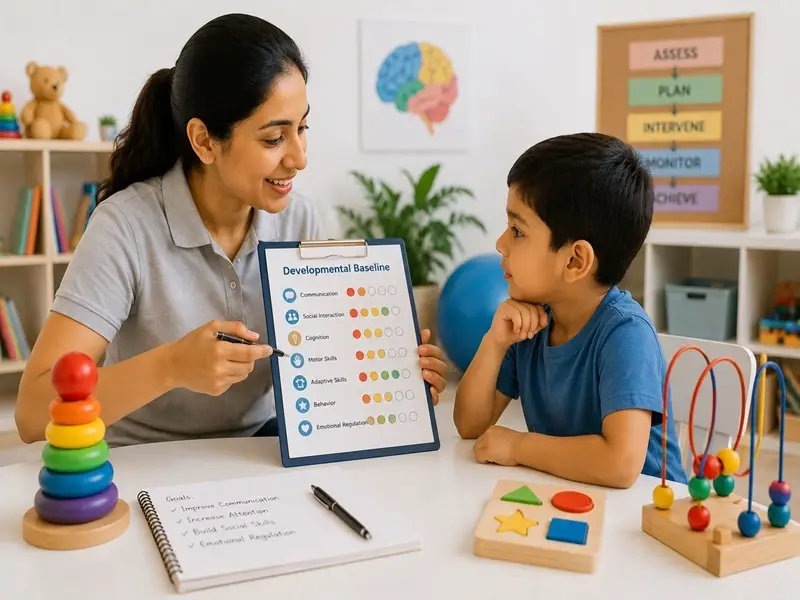
Therapist assessing a child's developmental skills to create personalized therapy goals

How Developmental Baselines Help Create Personalized Therapy Goals

Introduction Every child develops at their own pace, and their strengths and challenges can be different. Before starting therapy, understanding a child’s current developmental abilities can help professionals create goals that are realistic, measurable, and suited to the child’s needs. A developmental baseline provides a starting point for understanding where a child is today and helps therapists plan appropriate intervention. What Is a Developmental Baseline? A developmental baseline is a picture of a child’s current abilities across different areas of...

Read More

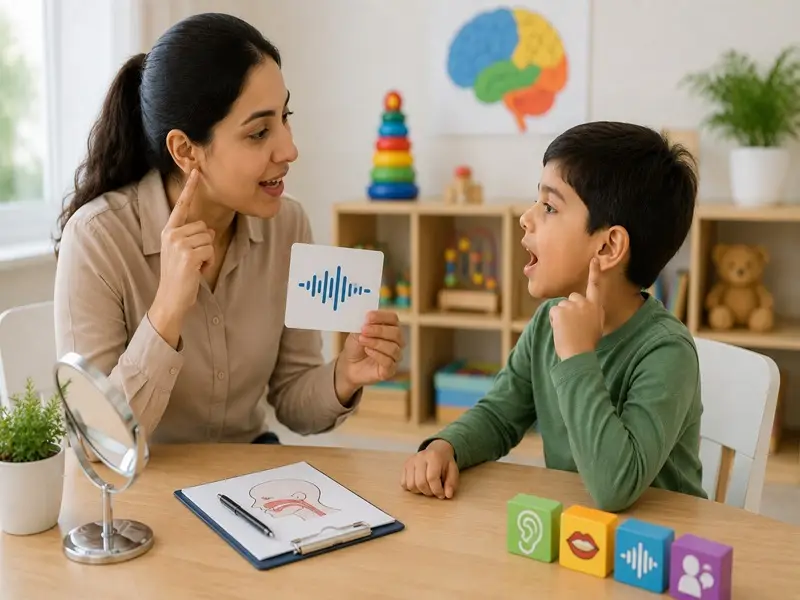
Child participating in speech therapy to support auditory feedback and speech development

Understanding the Role of Auditory Feedback in Speech Development

Introduction Speech development involves several skills working together, including listening, understanding sounds, producing words, and communicating with others. Auditory feedback plays an important role because children use what they hear to understand and adjust their own speech. For children experiencing speech or communication difficulties, understanding the role of auditory feedback can help parents learn more about how speech development is supported. What Is Auditory Feedback? Auditory feedback is the process of hearing the sounds we produce and using that information...

Read More

AECET therapy session supporting emotional development in children

What Is AECET and How Does It Support Emotional Development?

Introduction Emotional development plays an important role in a child’s ability to communicate, manage feelings, build relationships, and respond to everyday situations. Some children may find it difficult to understand or express their emotions, which can affect their behaviour, confidence, and social interactions. AECET, or Affect Engagement Cognition and Emotional Therapy, is a specialized program offered by Neuro Revolution International that focuses on supporting children’s emotional development. What Is AECET? AECET is designed to support children who experience challenges related...

Read More

Child undergoing an autism assessment with a qualified professional

What Does an Autism Assessment Actually Measure?

Introduction When parents notice differences in their child’s communication, behaviour, social interaction, or development, they may be advised to consider an autism assessment. For many parents, the assessment process can feel confusing or overwhelming. An autism assessment is not based on one behaviour or one test. It generally involves looking at different areas of a child’s development to understand their strengths, challenges, communication patterns, and social behaviour. What Is an Autism Assessment? An autism assessment is a structured evaluation designed...

Read More

Parents tracking their child’s developmental progress during therapy

How to Track Your Child’s Developmental Progress During Therapy

Introduction Starting therapy is an important step in supporting a child’s development, but knowing whether the therapy is helping is equally important. Every child develops at their own pace, and progress may not always be visible immediately. Small improvements in communication, attention, social interaction, behaviour, learning, or daily activities can be meaningful milestones. Tracking developmental progress helps parents and therapists understand what is improving, what needs more support, and whether therapy goals need to be adjusted. A structured approach can...

Read More

Parents choosing an autism therapy program for their child

What Parents Should Know Before Choosing an Autism Therapy Program

Introduction Choosing the right autism therapy program can be an important and sometimes overwhelming decision for parents. Every child has unique strengths, challenges, communication abilities, and developmental needs, so the same therapy approach may not work for every child. A well-planned program should begin with understanding the child’s individual needs and setting realistic developmental goals. From proper assessment and personalized therapy to experienced professionals and regular progress tracking, parents should consider several factors before making their decision. Knowing what to...

Read More

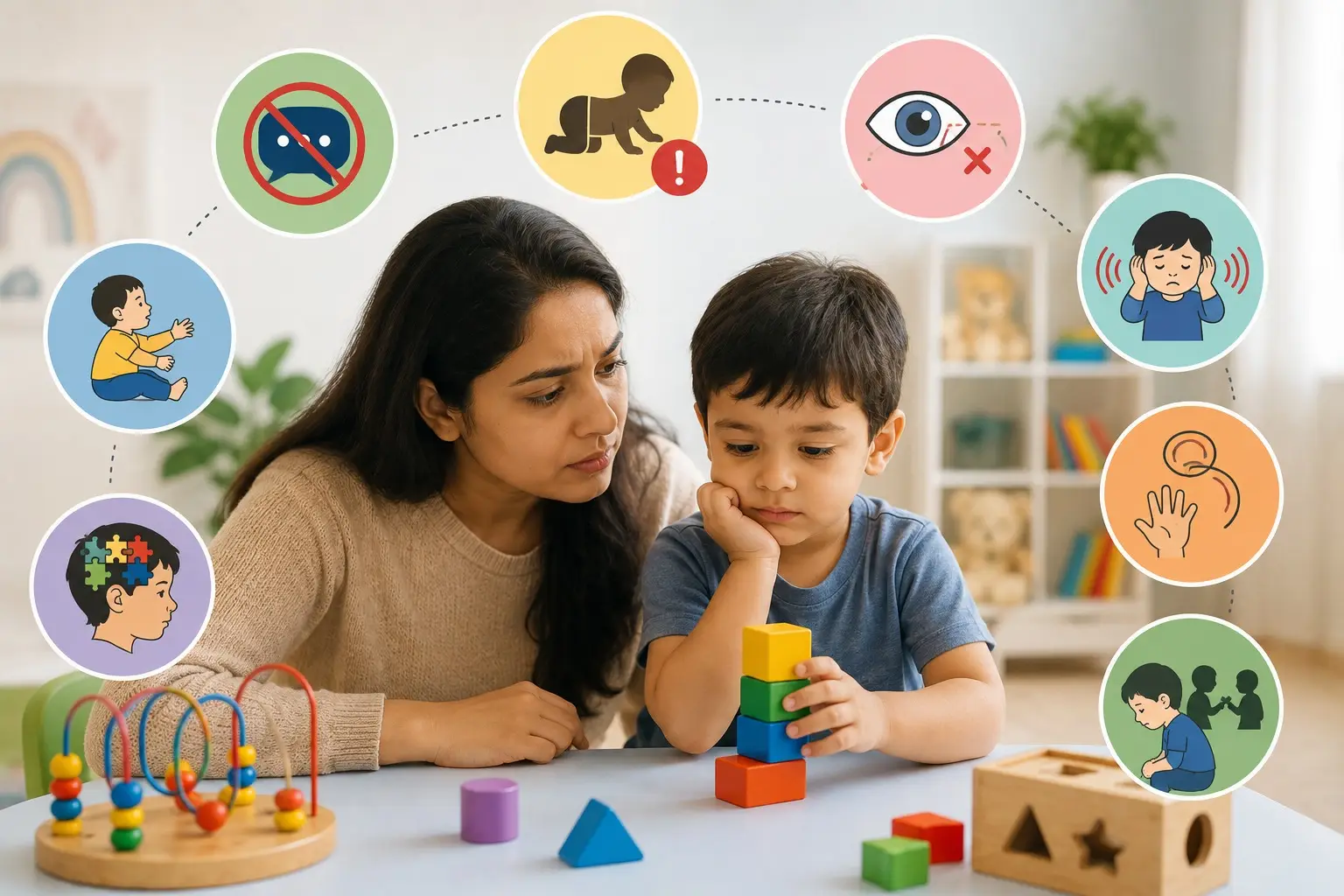
Early signs of developmental delays in children

Early Signs of Developmental Delays Parents Should Never Ignore

Introduction Every child develops at their own pace, but certain developmental delays may indicate that a child needs additional support. Recognizing these signs early can help parents seek professional guidance and understand their child’s developmental needs. Developmental delays can affect areas such as speech, communication, movement, learning, social interaction, behaviour, and everyday skills. Early attention does not mean assuming the worst; it means understanding the child better and taking timely steps when support may be needed. What Are Developmental Delays?...

Read More