
How Developmental Baselines Help Create Personalized Therapy Goals
Introduction
Every child develops at their own pace, and their strengths and challenges can be different. Before starting therapy, understanding a child’s current developmental abilities can help professionals create goals that are realistic, measurable, and suited to the child’s needs.
A developmental baseline provides a starting point for understanding where a child is today and helps therapists plan appropriate intervention.
What Is a Developmental Baseline?
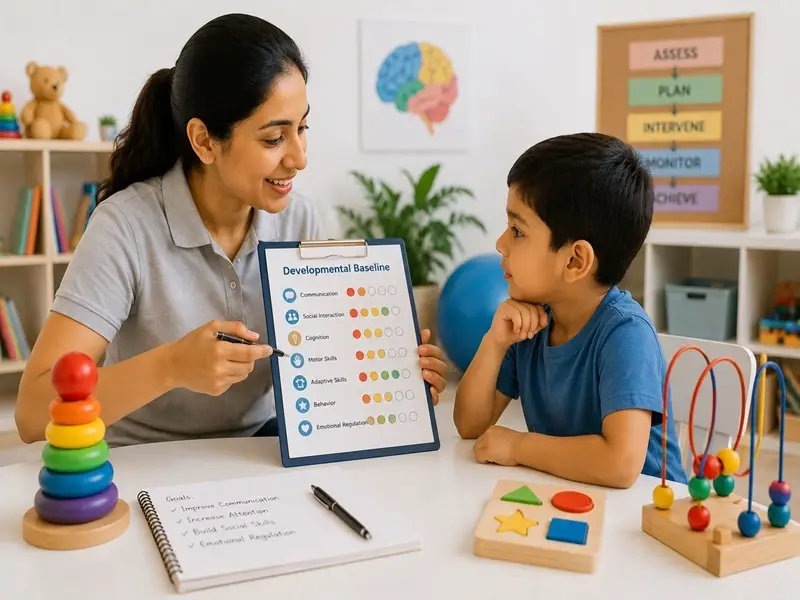
A developmental baseline is a picture of a child’s current abilities across different areas of development. It may include communication, social interaction, behaviour, attention, motor skills, learning, and daily living skills.
This information helps professionals understand the child’s strengths as well as areas where additional support may be beneficial.
Why Are Baselines Important?
Without a clear starting point, it can be difficult to measure how much a child has progressed. A baseline allows therapists and parents to compare the child’s abilities over time.
For example, if a child initially has difficulty following simple instructions, this can become a specific therapy goal. Progress can then be monitored as the child’s ability improves.
How Baselines Help Create Therapy Goals
Once a child’s developmental profile is understood, professionals can create individualized goals.
Goals may focus on:
Improving communication
Increasing attention and participation
Developing social interaction
Supporting emotional regulation
Improving motor skills
Building independence in daily activities
Goals can be adjusted as the child develops and achieves new skills.
Monitoring Progress
Regular progress reviews are important because children may develop at different rates. Therapists can use observations, assessments, and parent feedback to understand whether current goals are working.
If a goal has been achieved, a new goal can be introduced. If a child continues to struggle, the intervention approach may be reviewed.
The Role of Parents
Parents provide valuable information because they observe their child in everyday situations. Sharing changes noticed at home, school, or social settings can help therapists understand how skills are being used outside therapy sessions.
Working together with professionals can make the intervention process more consistent.
Choosing the Right Support
When searching for the Best autism centre in Pune, parents should look for individualized assessments, qualified professionals, personalized therapy plans, and regular progress monitoring.
Families looking for the Best ADHD centre treatment in Pune should also consider comprehensive assessment and goal-based intervention.
If you are looking for the Best child psychologist in Hadapsar, consider qualifications, experience, assessment methods, and communication with parents.
Conclusion
A developmental baseline provides an important starting point for personalized therapy. It helps professionals understand a child’s current abilities, identify areas requiring support, and create meaningful goals.
With regular assessment, progress tracking, and parent involvement, therapy goals can evolve along with the child’s development. A personalized approach can help ensure that intervention remains focused on the child’s individual needs and progress.