
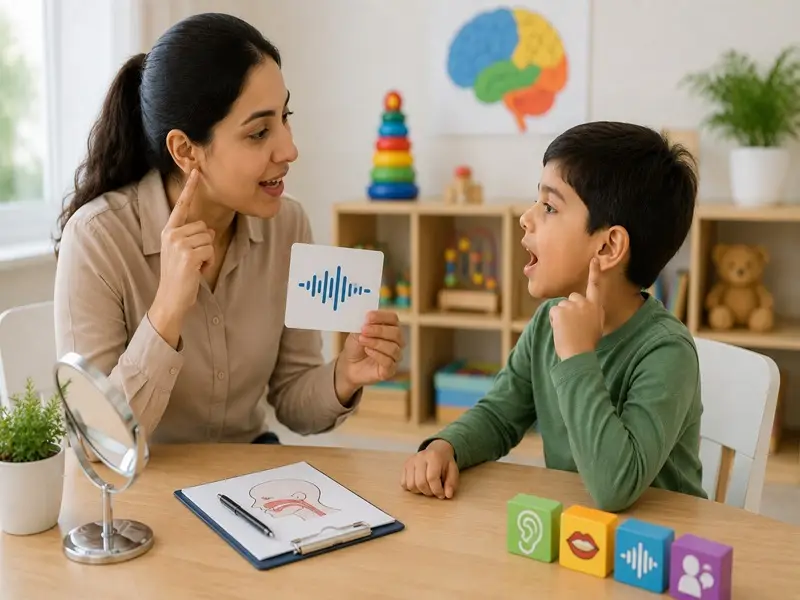
Understanding the Role of Auditory Feedback in Speech Development
Introduction
Speech development involves several skills working together, including listening, understanding sounds, producing words, and communicating with others. Auditory feedback plays an important role because children use what they hear to understand and adjust their own speech.
For children experiencing speech or communication difficulties, understanding the role of auditory feedback can help parents learn more about how speech development is supported.
What Is Auditory Feedback?
Auditory feedback is the process of hearing the sounds we produce and using that information to improve how we speak.
For example, when children say a word, they hear their own voice and gradually learn to adjust pronunciation, volume, rhythm, and clarity.
How Does It Support Speech Development?
Auditory feedback can support children by helping them:
Recognize different sounds
Improve pronunciation
Develop clearer speech
Understand speech patterns
Adjust their voice and volume
Improve listening and communication skills
These abilities develop gradually and can vary from one child to another.
Why Is Listening Important for Speech?
Before children can communicate effectively, they need to process and understand the sounds around them. Listening helps them recognize words, imitate sounds, and understand how sounds are combined.
Difficulties with listening or processing sounds may sometimes affect communication and speech development.
When Should Parents Seek Support?
Parents may consider professional guidance if their child consistently has difficulty producing age-appropriate sounds, understanding spoken communication, responding appropriately, or making themselves understood.
Speech difficulties can have different causes, so assessment is important before deciding on an intervention.
How Can Speech Therapy Help?
A speech and language professional can assess a child’s communication abilities and identify specific areas that require support. Therapy may focus on speech sounds, language development, communication, listening skills, and functional communication depending on the child’s needs.
Neuro Revolution International provides speech and communication-focused interventions as part of its developmental support services.
Why Individualized Therapy Matters
Every child’s communication development is different. A personalized therapy plan can focus on the child’s specific strengths and challenges rather than using the same approach for every child.
Regular progress monitoring can also help professionals adjust goals as the child develops.
Choosing the Right Support
Parents searching for the Best autism centre in Pune should consider qualified professionals, individualized therapy plans, assessment methods, and regular progress reviews.
Families looking for the Best ADHD centre treatment in Pune should also consider comprehensive assessment and personalized intervention.
If you are searching for the Best child psychologist in Hadapsar, look for appropriate qualifications, experience with children, and clear communication with parents.
Conclusion
Auditory feedback is an important part of learning to produce and understand speech. By hearing their own voice and the speech of others, children gradually learn to improve sounds, pronunciation, rhythm, and communication.
If you have concerns about your child’s speech or communication development, professional assessment can help identify their needs and guide appropriate support. With individualized intervention and consistent practice, children can build stronger communication skills over time.