
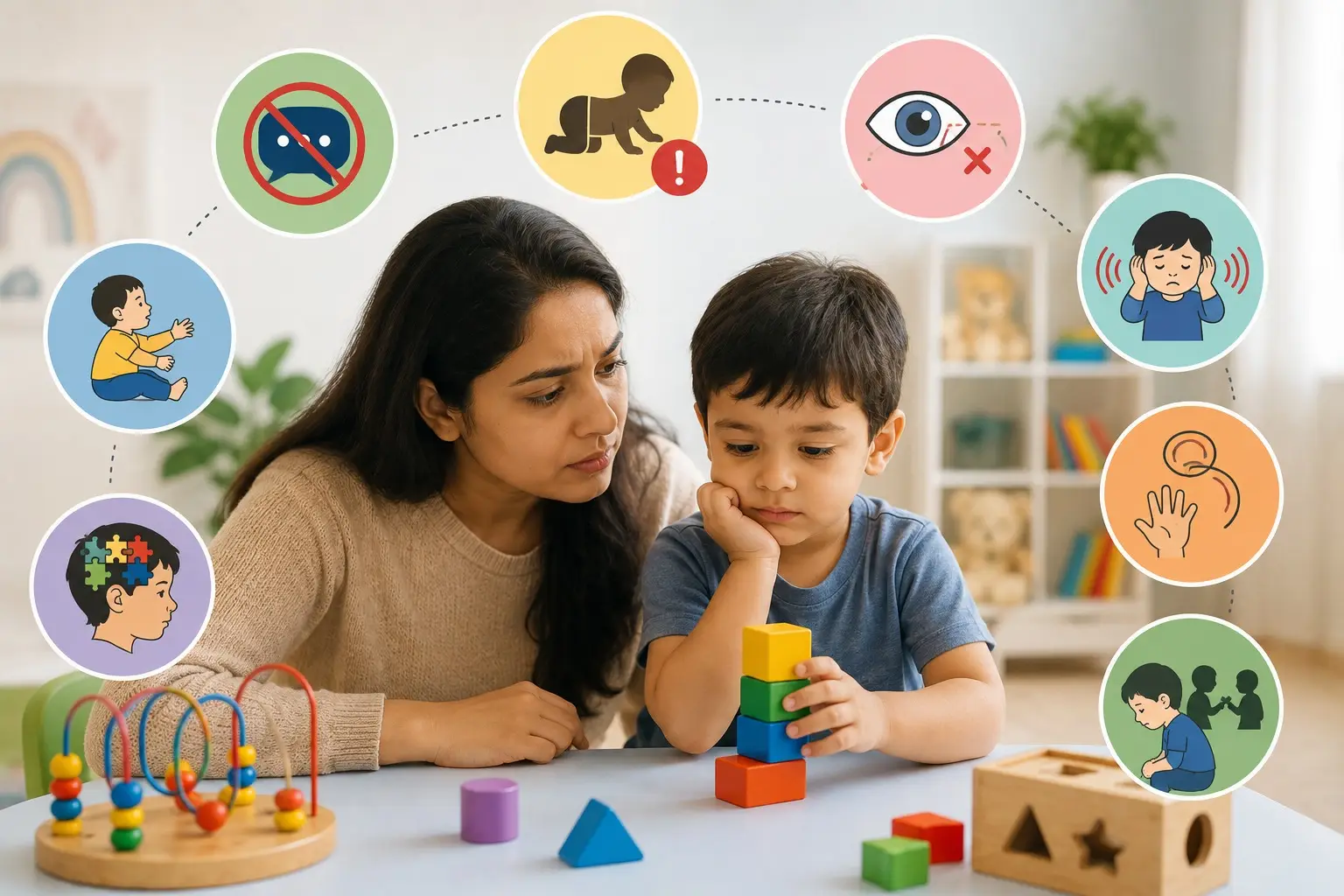
Early Signs of Developmental Delays Parents Should Never Ignore
Introduction
Every child develops at their own pace, but certain developmental delays may indicate that a child needs additional support. Recognizing these signs early can help parents seek professional guidance and understand their child’s developmental needs.
Developmental delays can affect areas such as speech, communication, movement, learning, social interaction, behaviour, and everyday skills. Early attention does not mean assuming the worst; it means understanding the child better and taking timely steps when support may be needed.
What Are Developmental Delays?
A developmental delay occurs when a child takes longer than expected to develop certain age-related skills. These skills can include communication, physical movement, social interaction, cognitive abilities, and emotional development.
Each child is different, so parents should avoid comparing their child directly with other children. Instead, noticeable or persistent differences should be discussed with a qualified professional.
Early Signs Parents Should Watch For
- Delayed Speech or Communication
One of the signs parents may notice is difficulty developing age-appropriate communication skills.
Some children may:
Use very few words for their age
Have difficulty expressing their needs
Not respond consistently when spoken to
Have difficulty understanding simple instructions
Lose previously developed communication skills
Speech and communication difficulties can have different causes, so professional assessment is important before reaching conclusions.
- Limited Social Interaction
Children generally develop social skills through interaction with parents, siblings, and other children. Parents may notice concerns when a child consistently has difficulty engaging with others.
Signs may include limited interest in social interaction, difficulty participating in play, or challenges with sharing attention and responding to others.
Socialization therapy and other developmental interventions may help children build appropriate interaction skills based on their individual needs.
- Difficulty With Attention and Learning
Some children may have difficulty staying focused on an activity, following instructions, completing simple tasks, or learning new skills.
These difficulties do not automatically mean that a child has ADHD or another developmental condition. A professional assessment can help identify the underlying concerns.
For families looking for the Best ADHD centre treatment in Pune, it is important to choose professionals who conduct appropriate assessments before recommending interventions.
- Delays in Motor Skills
Motor development includes skills such as sitting, walking, running, holding objects, and coordinating movements.
Parents may want to seek professional guidance if their child experiences noticeable difficulty with age-appropriate movement or coordination.
Early identification can help professionals understand whether additional developmental support may be beneficial.
- Difficulty With Emotional Regulation
Some children may have difficulty expressing or managing their emotions. Frequent intense reactions, difficulty calming down, or challenges communicating feelings can sometimes indicate that additional support may be useful.
Parents can observe when these reactions occur and share their observations with professionals.
- Difficulty With Everyday Activities
Developmental progress also includes learning everyday skills. Depending on age, children gradually become more independent with activities such as eating, dressing, communicating needs, following routines, and participating in simple tasks.
Persistent difficulty with age-appropriate activities may be worth discussing during a developmental assessment.
Why Early Assessment Matters
Recognizing developmental concerns early gives parents an opportunity to understand their child’s strengths and areas requiring support.
A professional assessment can help establish a clearer developmental picture and guide appropriate intervention. At Neuro Revolution International, clinical assessments are used to understand individual developmental needs and support personalized intervention planning.
Parents should remember that noticing a developmental concern does not mean a child has a specific diagnosis. Assessment is the appropriate way to understand what may be happening.
How Parents Can Track Development
Parents can keep simple notes about their child’s development. Pay attention to changes in:
Communication
Social interaction
Attention
Learning
Movement
Behaviour
Emotional responses
Daily living skills
Sharing these observations with a qualified professional can provide useful information during an assessment.
Choosing the Right Professional Support
If you are looking for the Best child psychologist in Hadapsar, consider the professional’s qualifications, experience with children, approach to assessment, and ability to communicate clearly with parents.
A supportive professional should take the time to understand the child rather than making assumptions based on a single behaviour.
Choosing an Appropriate Therapy Centre
When searching for the Best autism centre in Pune, parents should look for a centre that provides proper assessments, individualized intervention plans, qualified professionals, and regular progress reviews.
The number of services offered is less important than whether the program is appropriate for the child’s individual needs.
Questions Parents Can Ask
If you notice possible developmental concerns, consider asking:
Is my child’s development progressing appropriately?
Which areas require closer observation?
Would a developmental assessment be helpful?
What support may be appropriate?
How can we monitor progress?
What can we do at home to support development?
Getting professional guidance can help parents make informed decisions without unnecessary worry.
Final Thoughts
Developmental delays can sometimes be difficult for parents to recognize, particularly when changes happen gradually. Paying attention to communication, social interaction, learning, movement, emotional regulation, and everyday skills can help parents identify areas that may require additional support.
Early assessment does not mean labeling a child. It means gaining a better understanding of their developmental needs and exploring appropriate support.
If you have concerns about your child’s development, consider speaking with a qualified professional and discussing whether an assessment may be appropriate. With the right guidance, parents can better understand their child’s needs and support their developmental journey.