
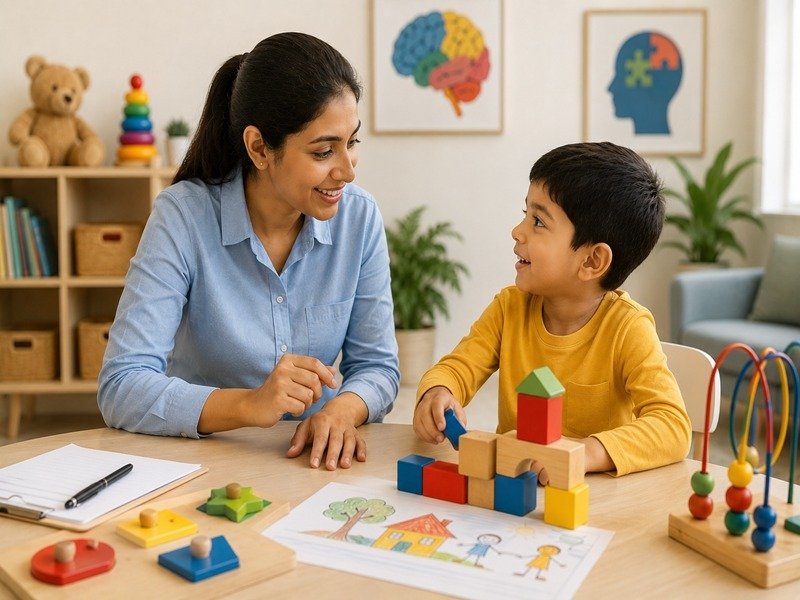
How Therapy Can Support School Readiness Beyond Academic Skills
Introduction
School readiness is about much more than knowing letters, numbers, or basic academic concepts. A child also needs to communicate, follow routines, interact with others, manage emotions, pay attention, and become increasingly independent.
For children with developmental, communication, or behavioural challenges, therapy can help build these foundational skills and make the transition to school more comfortable.
What Does School Readiness Really Mean?
School readiness includes a combination of social, emotional, communication, behavioural, and practical skills. A child may benefit from support in areas such as:
Following simple instructions
Communicating needs
Taking turns and sharing
Sitting and participating in activities
Managing emotions and frustration
Adjusting to routines
Completing simple tasks independently
Interacting appropriately with peers
These skills help children participate more confidently in the classroom.
How Therapy Can Support School Readiness
- Building Communication Skills
Children need to communicate with teachers and classmates throughout the school day. Speech and communication-focused therapy can support skills such as expressing needs, understanding instructions, and participating in conversations.
- Developing Social Skills
Socialization therapy can help children practise skills such as initiating interaction, maintaining conversations, understanding emotions, and building relationships with peers. Neuro Revolution International offers socialization therapy focused on confidence, communication, emotional wellbeing, and peer interaction.
- Supporting Emotional Regulation
Starting school can involve new people, routines, sounds, and expectations. Learning to recognize emotions and respond appropriately can help children manage frustration and unfamiliar situations more effectively.
- Encouraging Independence
School involves many everyday tasks, such as organizing belongings, following routines, asking for help, and completing activities. Therapy can incorporate age-appropriate activities that gradually encourage children to become more independent.
- Improving Attention and Participation
Being able to listen, follow instructions, and remain engaged in an activity is important for classroom participation. Individualized intervention can target these skills according to the child’s developmental needs.
Why Individualized Support Matters
Every child has different strengths and challenges. Neuro Revolution International states that its therapy approach uses assessments to identify developmental gaps and create individualized treatment plans, with progress reviewed periodically.
This allows therapy goals to focus on the skills that are most relevant to a particular child’s needs.
Parents Have an Important Role
Skills learned during therapy become more useful when children can practise them in everyday situations. Parents can support school readiness by encouraging children to follow simple routines, communicate their needs, participate in household activities, and practise social interactions.
Consistent support at home can help children use their skills in different environments.
Choosing the Right Support
When looking for the Best autism centre in Pune, parents should consider qualified professionals, developmental assessments, individualized therapy plans, and regular progress monitoring.
For children experiencing attention or behavioural concerns, families searching for the Best ADHD centre treatment in Pune should also consider comprehensive assessment and personalized intervention.
If you are looking for the Best child psychologist in Hadapsar, consider professional qualifications, experience with children, assessment methods, and communication with parents.
Conclusion
School readiness goes beyond academic preparation. Communication, social interaction, emotional regulation, attention, flexibility, and independence all play an important role in helping children participate successfully in school.
With appropriate assessment and individualized therapy, children can develop practical skills that support not only their transition to school but also their confidence and independence in everyday life.
